Complete Guide

Everything You Need to Know About Agrivoltaics

A complete guide to agrivoltaics in the Czech Republic – from operating principles through legislation to current subsidy programs. Learn how to combine agricultural production with electricity generation on a single plot of land.

Key Principles of Agrivoltaics

task_alt

Panels are positioned so as not to compete with cultivated crops for access to light.

task_alt

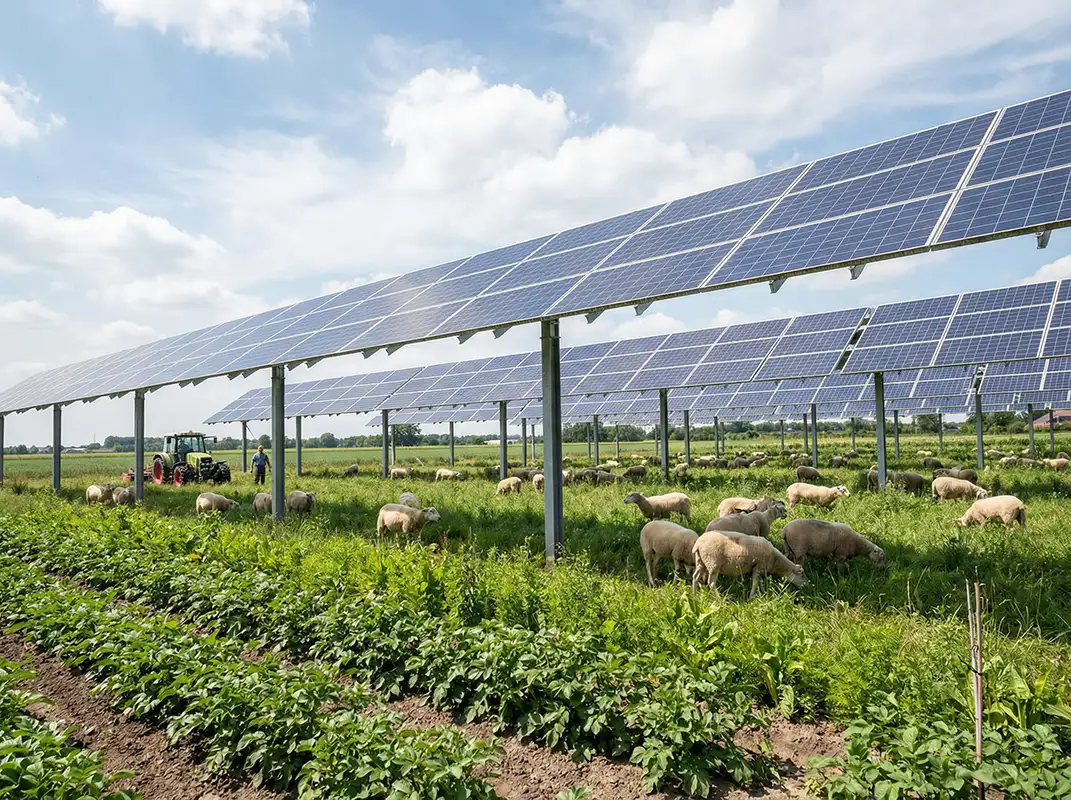
Structures allow passage of agricultural machinery.

task_alt

Land remains in agricultural use and is not removed from the agricultural land fund.

task_alt

Eligibility for both agricultural and energy subsidies is preserved.

Types of Agrivoltaic Systems

Horizontal Systems (Above Crops)

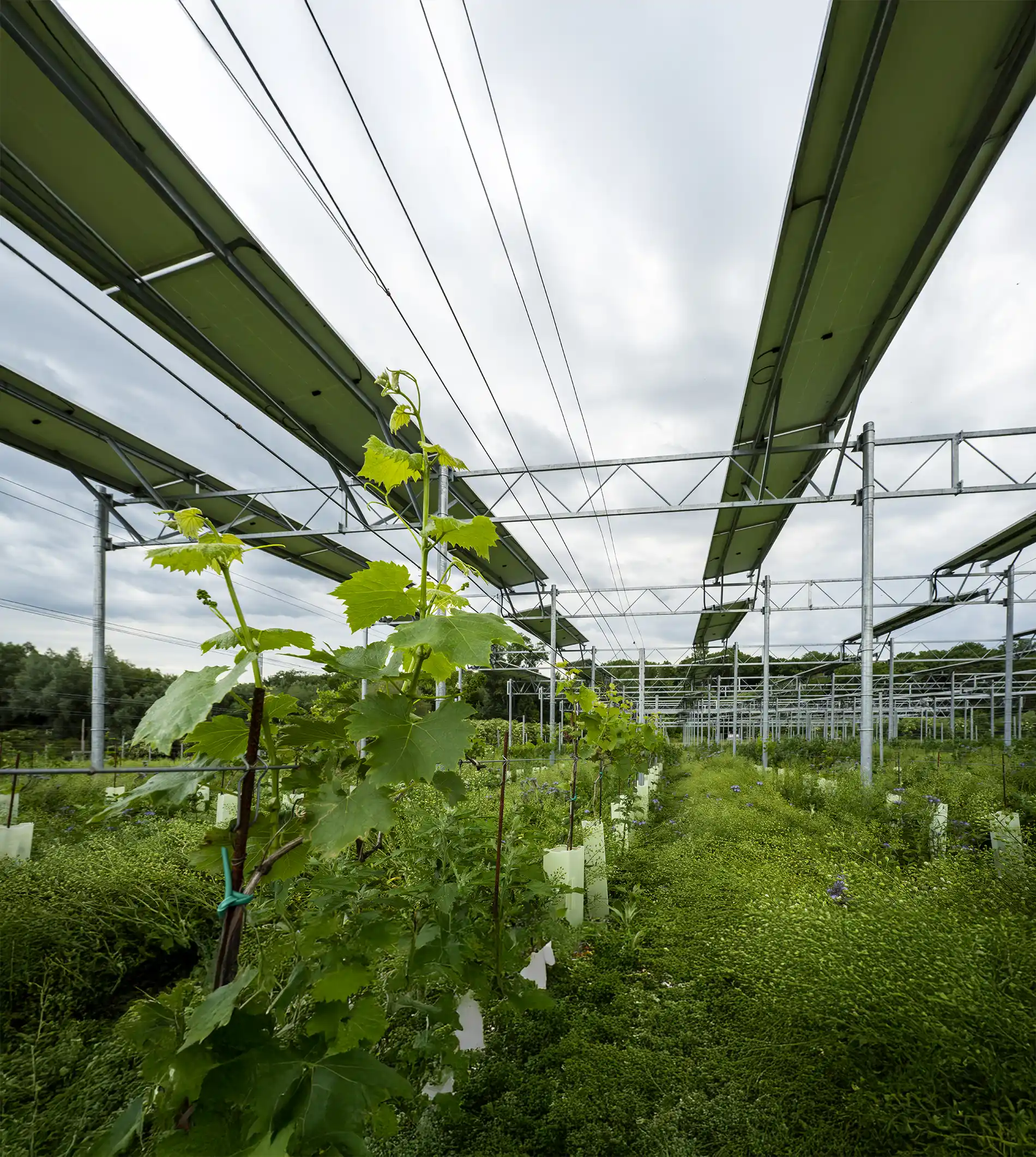
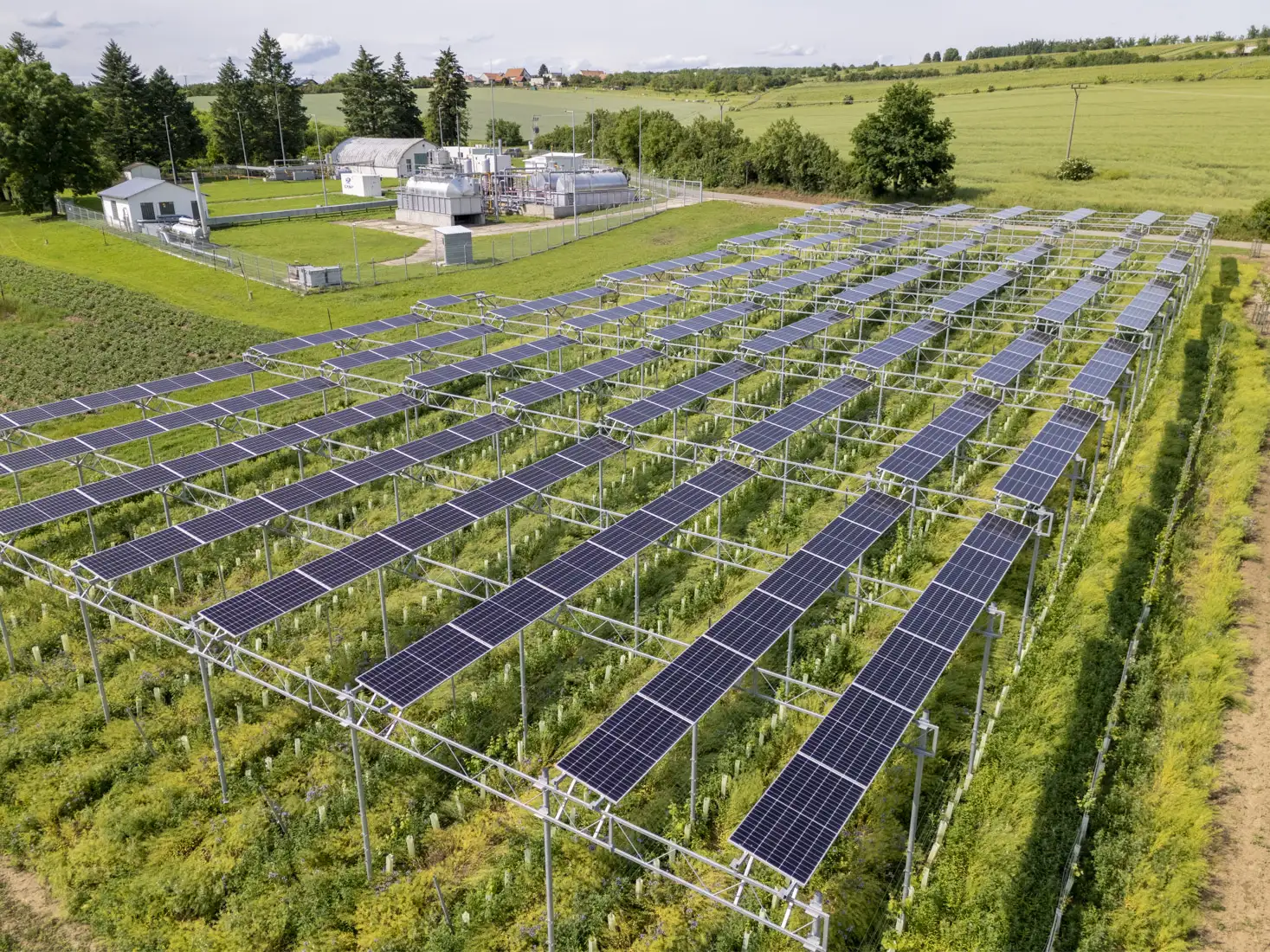
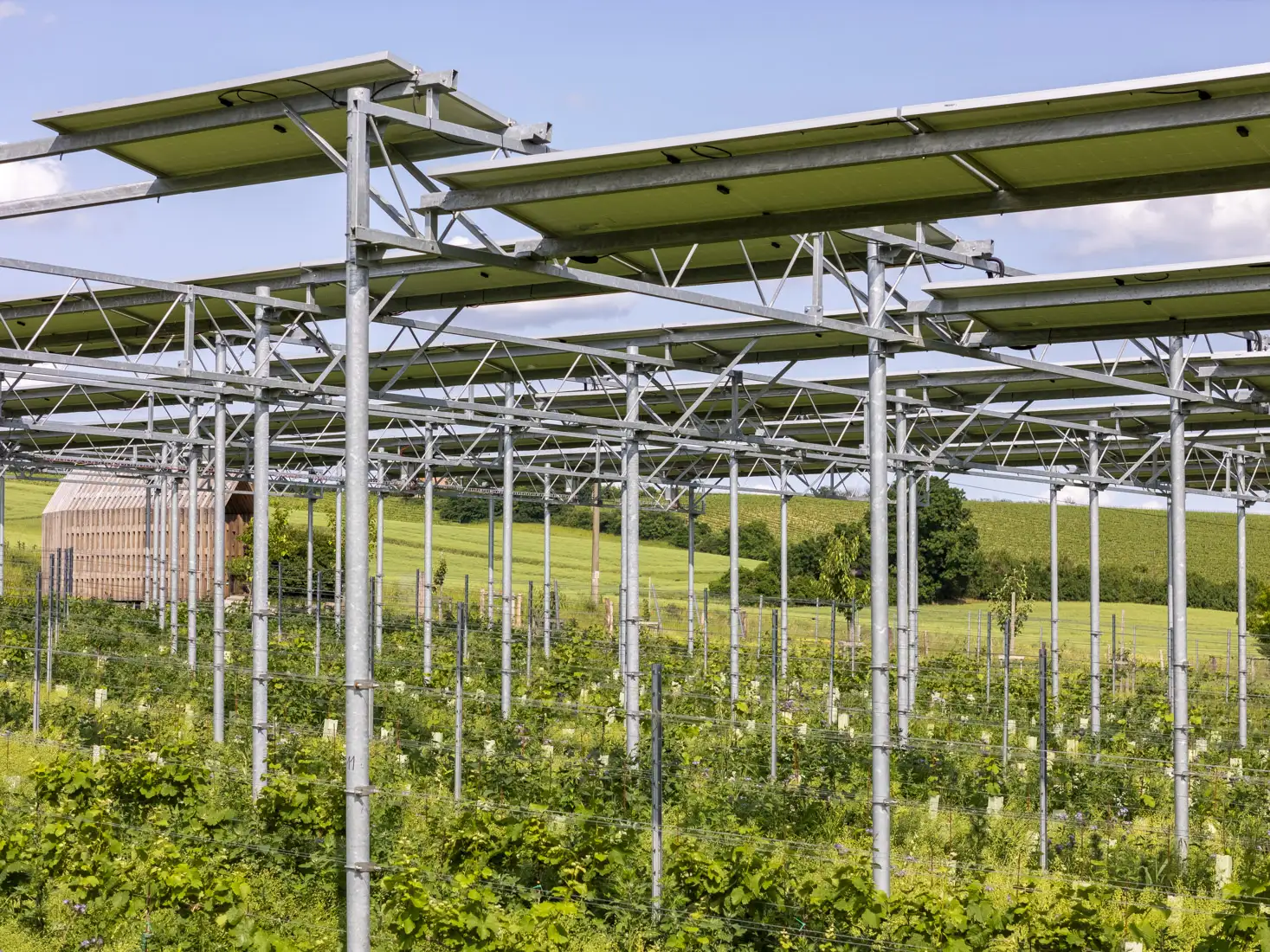
Panels are mounted on an elevated structure above the cultivation area. Structure height ranges from 3.5 to 5 meters, up to 8 meters for special crops such as hops. Panels can be south-facing or equipped with a single-axis tracking system.

Suitable crops under Czech legislation

task_alt

ovocné sady
(apple, pear, cherry trees)

task_alt

Vineyards

task_alt

Hop gardens

task_alt

Berry crops in nurseries and container operations

task_alt

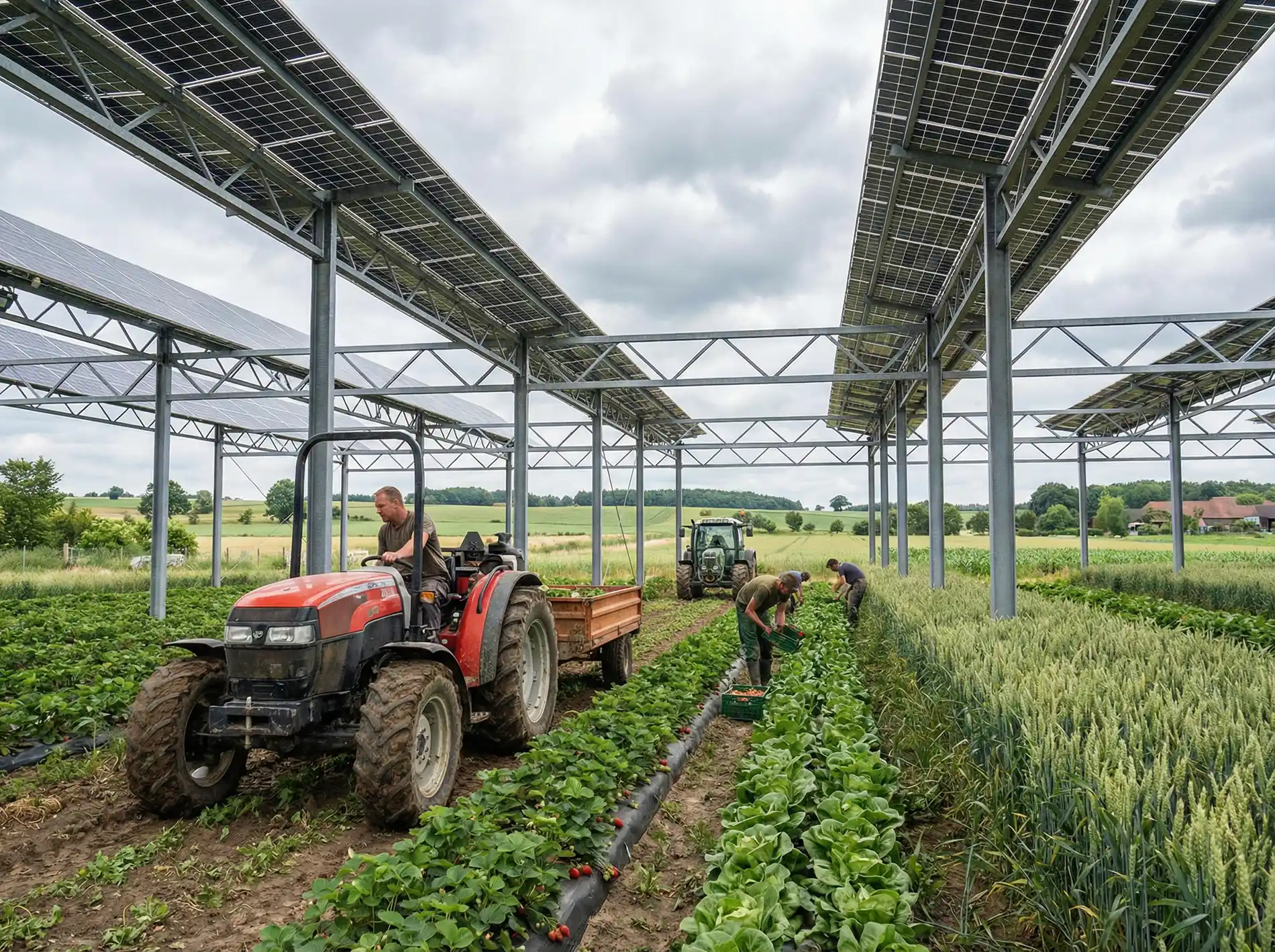
Labor-intensive vegetables (from December 2025)

Advantages of horizontal systems

task_alt

Protection of crops from hail and torrential rain

task_alt

Reduction of plant stress from excessive solar radiation

task_alt

Protection against spring frosts (temperature in orchards +1–1.5°C)

task_alt

Reduction in irrigation needs by up to 65%

Vertical Bifacial Systems

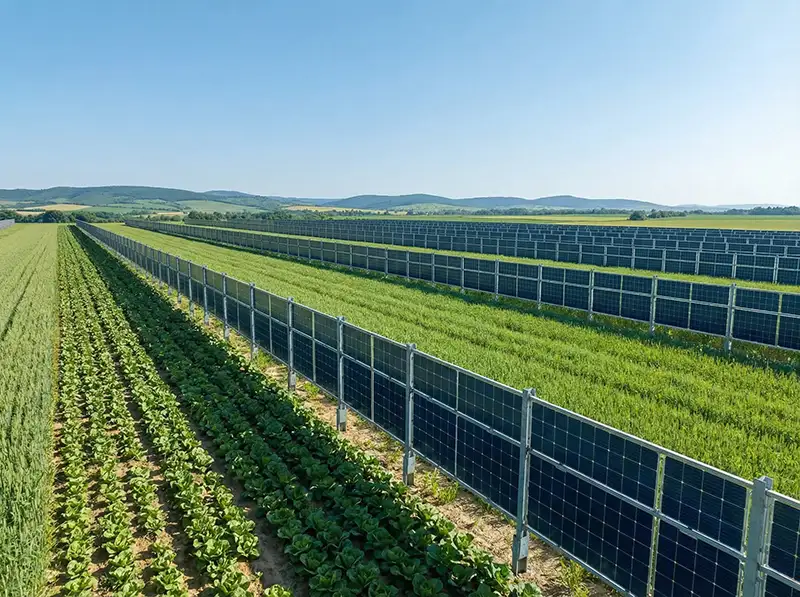
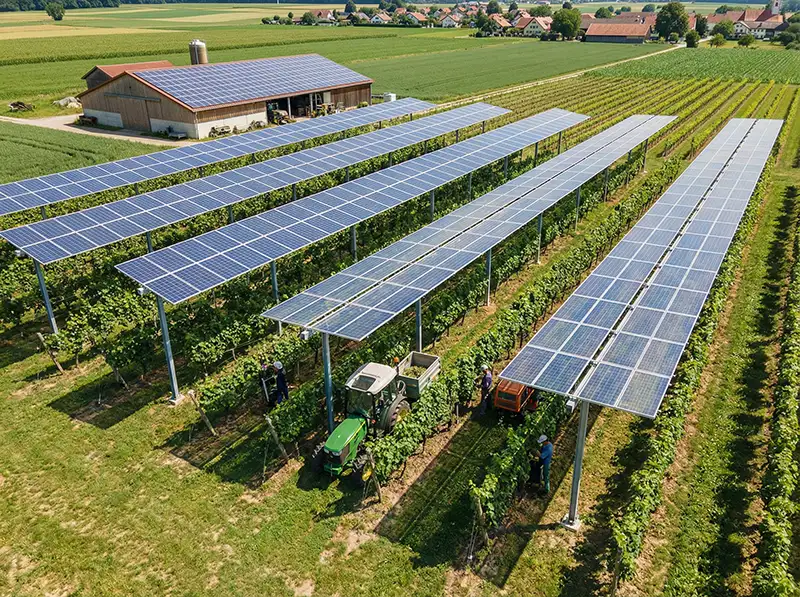
Double-sided (bifacial) panels are oriented east-west and form vertical "fences" between crop rows. Panel height is approximately 3 meters, with a minimum spacing of 10 meters between lines.

Benefits of Agrivoltaics for Farmers

Reduction of heat stress

task_alt

Partial shading protects crops from sunburn

task_alt

Lower leaf temperature reduces transpiration losses

task_alt

Some crops (raspberries, blueberries, lettuce) thrive better under partial shade

Water Savings

task_alt

Jalapeños: 65% reduction in transpiration loss while maintaining the same yield

task_alt

Tomatoes in Arizona: double production under panels due to protection from scorching

task_alt

Raspberries in the Netherlands: yield increase of up to 16%

Protection against extreme weather

task_alt

Hail – panels act as a physical barrier

task_alt

Torrential rain – they cushion the impact of raindrops

task_alt

Spring frosts – temperature beneath panels is 1–1.5°C higher

Return

Economics of Agrivoltaic Projects

Additional Economic Benefits

  • Agricultural production continues (SAIF subsidies preserved)
  • Savings on irrigation costs (up to 65% less water)
  • Crop protection against damage from extreme weather
  • Option to sell surplus to the grid

Frequently Asked Questions (FAQ)

A simple overview of answers to your most common questions.

Will I lose agricultural subsidies if I install agrivoltaics?

What minimum area do I need?

Can I install agrivoltaics on arable land with cereals?

Can I install agrivoltaics on permanent grassland?

How long does installation take?

What is the lifespan of an agrivoltaic system?

Do I need an ERO license?

Can agrivoltaics be combined with battery storage?

Legislative Framework in the Czech Republic

Advantages of the New Legislation

task_alt

Agrivoltaics = agricultural structure (no zoning plan amendment required)

task_alt

Land is not removed from the agricultural land fund

task_alt

Eligibility for agricultural subsidies preserved (SAPS, agri-environmental measures)

task_alt

No obligation to pay land-take levies

task_alt

Simplified permitting for capacities up to 100 kW

Permitted Agricultural Crops

Original decree (from 1 January 2025):

task_alt

Vineyards

task_alt

Hop gardens

task_alt

Orchards

task_alt

Nurseries

task_alt

Container operations

Extension from 1 December 2025:

task_alt

Arable land with high and very high labor-intensity vegetables

task_alt

Vertical agrivoltaic systems

Agrivoltaics represents one of the most promising ways Czech agriculture can respond to the challenges of climate change and rising energy prices.

Thanks to new legislation, the Czech Republic has a clear legal framework for developing this technology, and farmers can take advantage of attractive subsidy support.The combination of dual income from a single plot, crop protection against extreme weather, and preservation of all agricultural subsidies makes agrivoltaics an attractive investment for wine growers, orchard farmers, and vegetable producers, as well as for investors seeking stable returns in the renewable energy sector.

Key Legislation

Act No. 334/1992 Coll. on the Protection of the Agricultural Land FundThe 2024 amendment introduced the definition of agrivoltaics into Czech law in Section 8a. The Act designates agrivoltaics as an agricultural structure, which brings significant advantages over conventional PV plants.

Decree No. 425/2024 Coll. (as amended by Decree No. 463/2025 Coll.)The implementing decree sets out technical and agricultural requirements for agrivoltaic electricity generating facilities. From 1 December 2025, an extended version applies, enabling installations above arable land with vegetables.

Act No. 458/2000 Coll. (Energy Act)Regulates the conditions for obtaining an electricity generation license from the Energy Regulatory Office.

Useful External Resources

  • Draft decree – Ministry of the Environment
  • Decree No. 425/2024 Coll. on Agrivoltaic Electricity Generating Facilities
  • Subsidy information – Sustainable Agriculture
  • Agrivoltaics in Czech Conditions – Agromanuál
  • Solar panels over agricultural land receive better legislative framework – Solární novinky
  • Wine with the right energy – Estate & Business
Useful External Resources

  • Draft decree – Ministry of the Environment
  • Decree No. 425/2024 Coll. on Agrivoltaic Electricity Generating Facilities
  • Subsidy information – Sustainable Agriculture
  • Agrivoltaics in Czech Conditions – Agromanuál
  • Solar panels over agricultural land receive better legislative framework – Solární novinky
  • Wine with the right energy – Estate & Business