Low-carbon hydrogen production options in the Czech Republic
How to produce hydrogen in the Czechia?
A practical perspective from H2 Fórum in Ostrava 2026
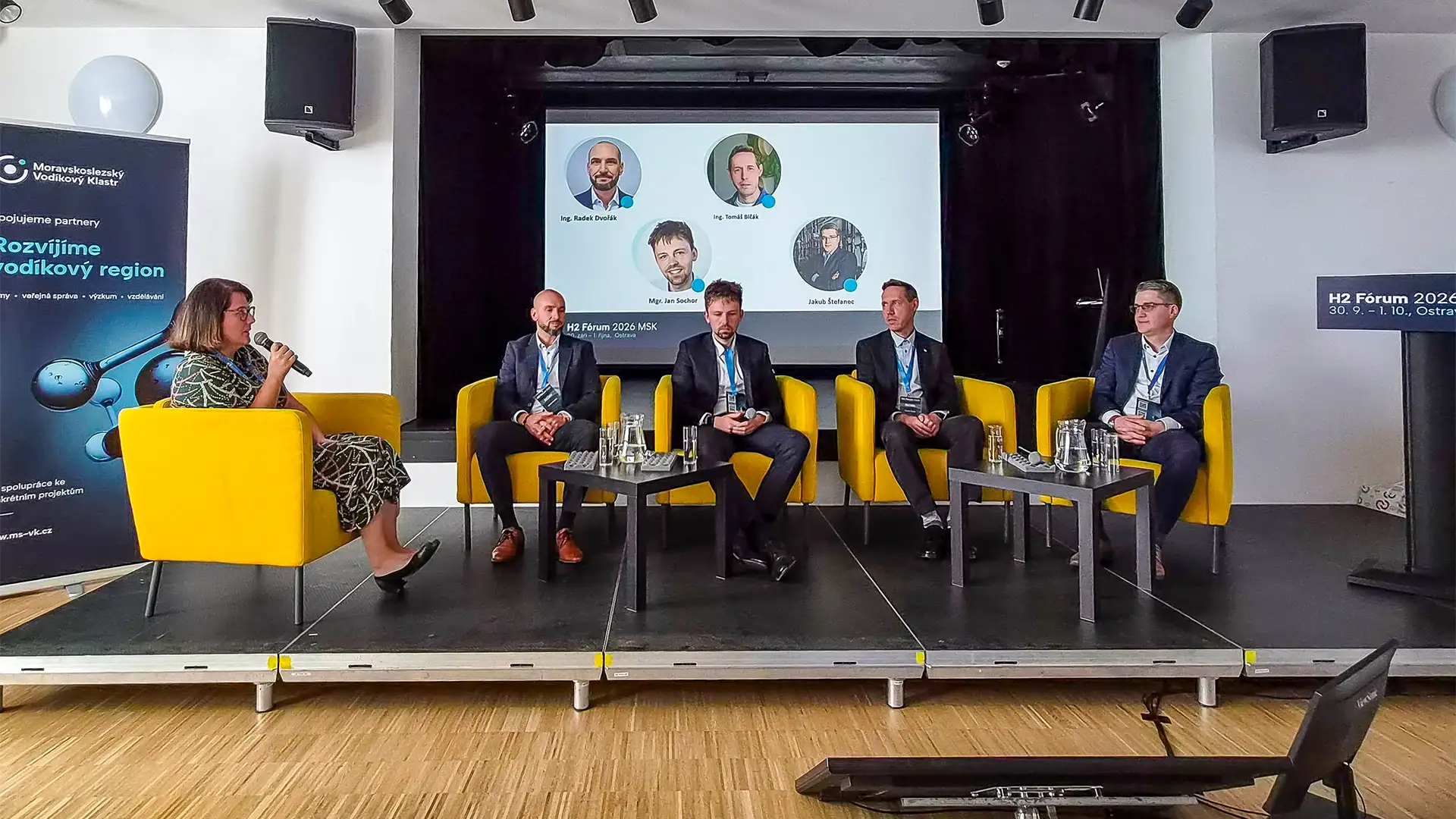
Low-carbon hydrogen production options in the Czech Republic
A practical perspective from H2 Fórum in Ostrava 2026
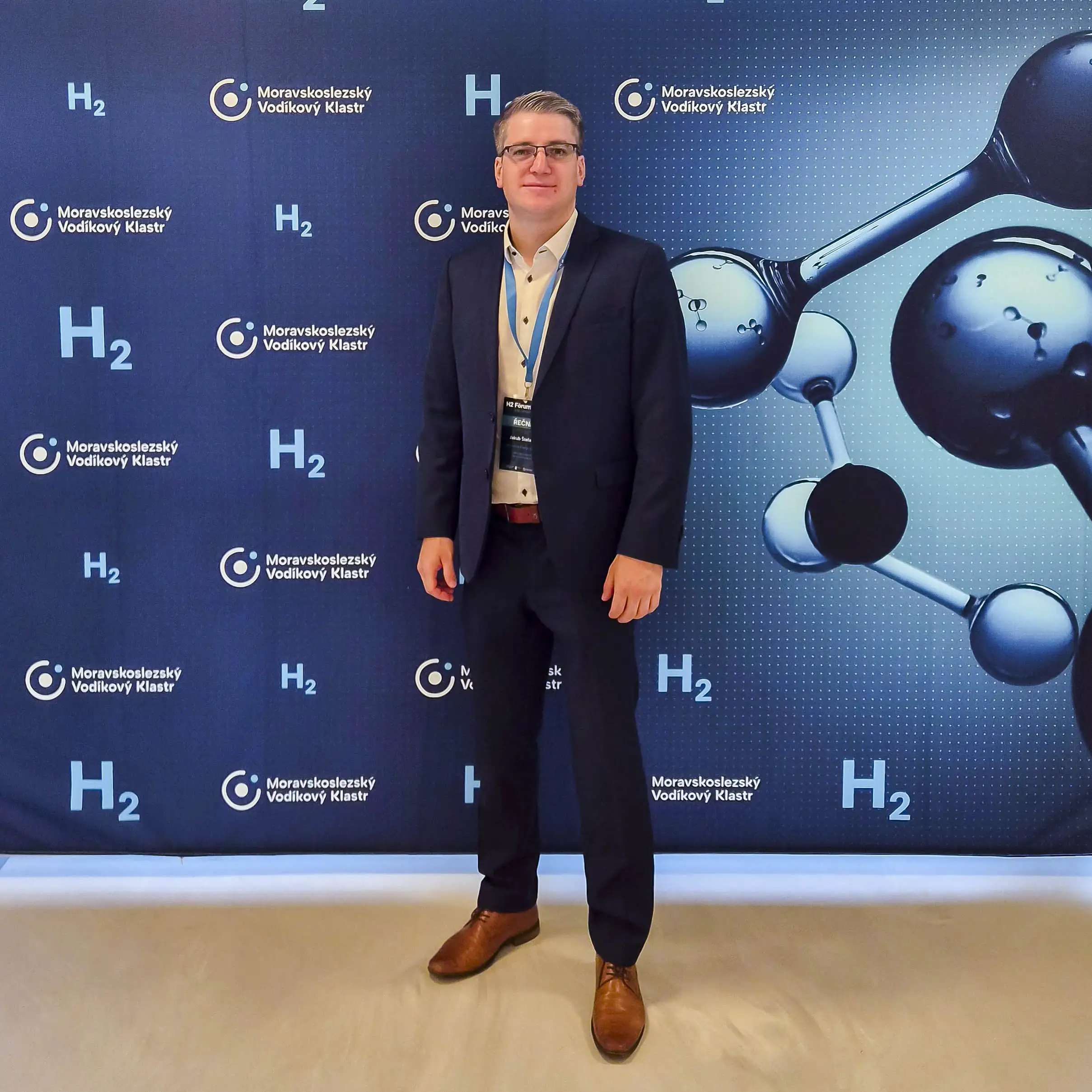
Hydrogen is most often discussed in connection with electrolysis, that is, splitting water using electricity. In his talk, Jakub Štefanec pointed out that waste which currently ends up in landfill or incinerators can also serve as feedstock.
ACTROM technology processes organic material: used and shredded tyres, rubber production rejects, plastics and rejects from the automotive industry, and plastic shavings and chips.
Projects to process dried sewage sludge from wastewater treatment plants are being prepared in cooperation with municipalities. According to Jakub Štefanec, this is also supported by the ban on landfilling certain types of waste, which is expected by 2030.
“The waste generated in the Czech Republic could be put to meaningful use, and we wouldn’t have to produce hydrogen solely from clean water”, said Jakub Štefanec.
In Vlkoš, Alternative Energy Systems not only operates the technology but also develops and manufactures it. The waste passes through three stages.
First, it is heated to up to 1,000 °C in a closed reactor without oxygen. The material does not burn but breaks down into gas, liquid and a solid residue, mostly carbon. The reactor is heated by induction, which is more energy-efficient than conventional resistance furnaces.
The gas from the reactor must then be cooled very quickly to prevent unwanted reactions. During cooling, pyrolysis oil is separated from it, and the gas is further dried and cleaned. The oil is not a finished product but an intermediate that can be processed further, for example in the production of solvents.
In the third stage, a process gas chromatograph analyses the gas and separates it into its individual components. The result is hydrogen and producer gas, which replaces CNG. Both are compressed into pressure vessels at up to 250 bar. Producer gas can power a CHP unit, an engine or forklift trucks, which is exactly how the company uses it at its own plant.
The entire process is closed. The facility has no chimney or exhaust and does not release CO2 into the atmosphere.
Vlkoš is the first facility of its kind in the Czech Republic to have obtained all permits. The permitting process began in 2019 and was completed in June 2021.
The Ministry of Industry and Trade has confirmed that hydrogen and synthetic CNG produced from waste are certified products.
01/ 2017 Purchase of the Vlkoš site
06/ 2017 Decision to install and develop the ACTROM unit
01/ 2018 Start of project documentation
01/ 2019 Completion of project documentation, start of the permitting process
06/ 2021 All permits obtained, as the first facility in the Czech Republic
12/ 2021 Completion of trial operation and unrestricted permit obtained
06/ 2023 Completion of certification of hydrogen and synthetic CNG produced from waste
2024 Manufacture of similar ACTROM units and deliveries to customers
2024 Deliveries of units in the UK, SK and CZ
2025 Certification of liquids, solids

Alternative Energy Systems manufactures ACTROM units mainly for customers abroad. Its largest market today is the United Kingdom, which has set up its own legislation and support schemes since leaving the European Union.
Interest comes mainly from waste management groups that already have waste collection, collection vehicles, shredders and transfer stations in place. A British group that handles 35% of used tyres in the British Isles is taking further units. One of the British installations is located in London’s low emission zone.
Another unit is operated in the Czech Republic by a Czech-Slovak group that is active in pyrolysis.
The capacity of these facilities is much smaller than that of an incinerator or landfill. However, companies see them as a way to avoid landfilling and incineration. The first step is usually CNG production.
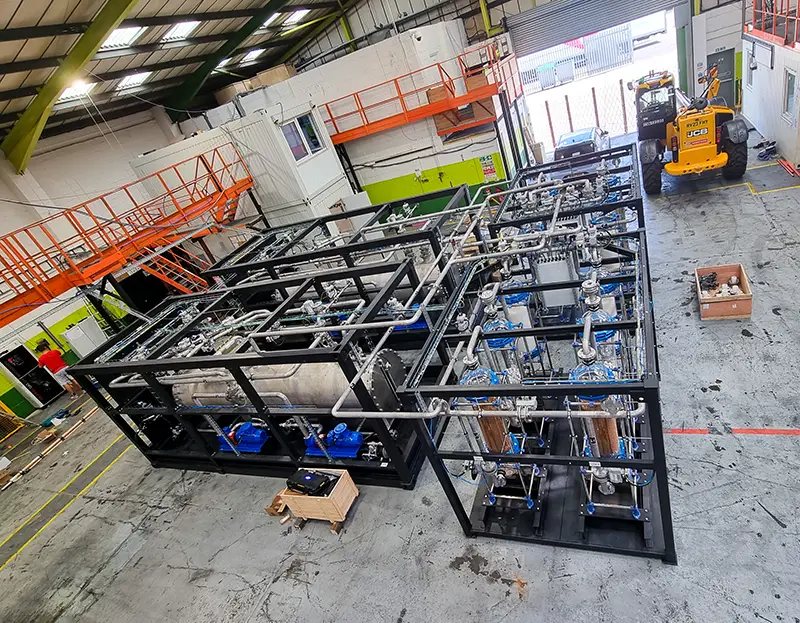
The discussion highlighted that gas production is only part of the picture. For the technology to make sense from a waste management perspective too, all outputs need to be certified, including the liquids and the solid carbon residue. Hydrogen and producer gas are certified; certification of the liquids and carbon is under way.
It is important that processing ordinary waste does not create hazardous waste, as this would worsen the environmental outcome. According to Jakub Štefanec, it is not easy to find a way within the legislation to reconcile energy recovery from waste with waste management rules.
At the end of the discussion, Jakub Štefanec noted that pilot projects alone will not move hydrogen forward.
“If there are only ever pilot projects whose results stay on paper, I’m not sure there will be any real progress in the next few years”, he said.
In his view, what makes sense are projects designed as a whole, covering hydrogen production, transport, the refuelling station and the end user, such as public transport. Targeted support for such integrated projects would help, including investment support, whether they are called hydrogen hubs or something else. Such projects can work even though the current European rules for hydrogen are far from ideal.
Find out more about the technology on the ACTROM page.
Articles
Solar power plant insights: options, tips, news and our procedures.
Alternative Energy Systems a.s.
Hlinky 45/114, 603 00 Brno - Pisárky
REGISTRATION NUMBER: 04381866, TAX NUMBER: CZ04381866

